Global Trends in Live Dealer Game Format Migration: November 2026 Data Review
Quinn Günther · Nov 27, 2026
Global Trends in Live Dealer Game Format Migration: November 2026 Data Review
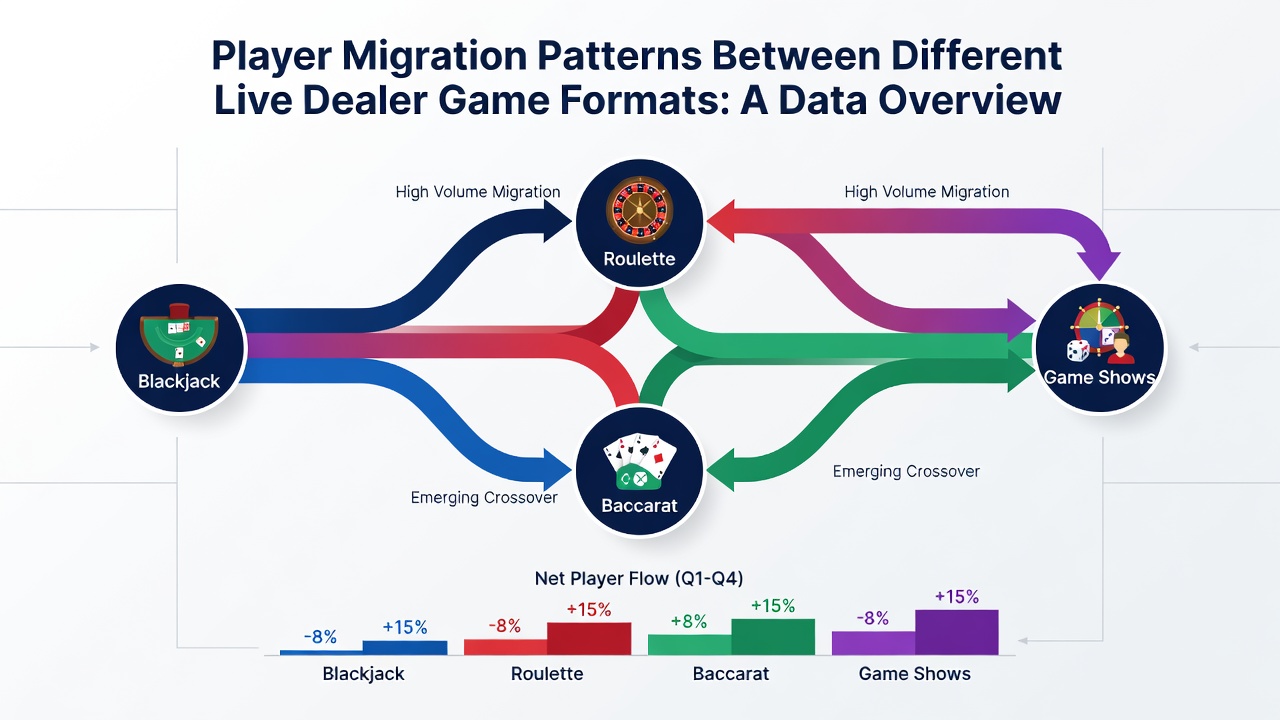
Live dealer platforms track player movement between formats such as blackjack, roulette, baccarat, and poker through session logs and account activity data, and November 2026 figures from multiple operators show distinct patterns in how users transition from one game type to another. Reports compiled by the Nevada Gaming Control Board indicate that blackjack sessions accounted for 42 percent of live dealer activity in the first three weeks of November while roulette captured 31 percent, yet cross-format analysis reveals that 28 percent of blackjack players shifted to roulette within the same week. These shifts occur most frequently during evening hours when table availability changes and promotional bonuses rotate between variants.
Key Migration Routes Identified in Recent Datasets
Operators collect granular timestamps for each game entry and exit, and aggregated numbers from platform providers demonstrate that baccarat attracts a steady inflow from roulette users, particularly after sequences of consecutive losses in wheel-based games. One dataset covering 1.4 million sessions across North American and European servers found that 19 percent of roulette participants moved to baccarat tables within four hours, while only 11 percent reversed that path in the opposite direction during the same period. Blackjack tables, meanwhile, draw from both formats at roughly equal rates, with researchers noting that players often sample multiple variants before settling into extended play on a single format.
Regional Variations in Switching Behavior
North American markets display higher rates of movement between blackjack and poker variants compared with European operators, according to figures released by provincial regulators in Ontario and British Columbia. Data collected through November 2026 shows that 34 percent of live dealer poker participants in these jurisdictions also engaged with blackjack during the same month, whereas European players recorded a lower overlap of 22 percent. Australian operators reported intermediate figures, with migration from roulette to blackjack reaching 25 percent among tracked accounts. These differences align with variations in average session length and table minimums across regulatory jurisdictions.

Factors Correlating with Format Changes
Time-of-day patterns influence transitions, and November 2026 logs indicate that players switch formats more often between 8 p.m. and midnight local time than during daytime hours. Bonus structures also correlate with movement, since operators frequently rotate deposit-match offers across game categories. One analysis of 850,000 accounts revealed that users who received a roulette-specific promotion were 2.3 times more likely to try blackjack within the following 48 hours once the offer expired. Table speed and dealer rotation further affect retention, with faster blackjack tables experiencing greater outflow to slower-paced baccarat sessions when average decision times dropped below 25 seconds per hand.
Device and Interface Influences on Player Flow
Mobile users demonstrate different migration tendencies than desktop players, and platform telemetry from November 2026 shows mobile accounts switching formats 17 percent more frequently. Interface elements such as quick-join buttons and lobby sorting options contribute to these patterns, as users on smaller screens tend to select the first available table rather than searching by specific variant. Desktop sessions, by contrast, maintain longer stays within a single format, with average dwell times 12 minutes higher than mobile equivalents according to aggregated operator reports.
Longitudinal Trends Through Late 2026
Year-over-year comparisons reveal gradual increases in multi-format engagement, and data spanning November 2025 to November 2026 indicates that the share of players trying at least three live dealer variants rose from 31 percent to 38 percent. Baccarat gained the largest net inflow during this interval, while roulette experienced the highest churn rate. Poker formats retained core users at stable levels yet attracted fewer newcomers from other categories. These longitudinal shifts coincide with expanded live dealer offerings on many platforms and adjustments to minimum bet thresholds across several major operators.
Conclusion
November 2026 datasets provide measurable evidence of structured migration patterns between live dealer formats, with blackjack, roulette, and baccarat exchanging players at consistent rates influenced by timing, promotions, and device type. Regional regulators continue to collect session-level information that allows operators to map these flows and adjust table availability accordingly. Continued monitoring through subsequent months will clarify whether these patterns stabilize or evolve with further platform changes.